
Angola, Burundi, Malawi, Seychelles and Zambia join REPAIR for rapid access to disaster response funding

The World Bank has approved the accession of Angola, Burundi, Malawi, Seychelles, and Zambia to the Regional Emergency Preparedness and Access to Inclusive Recovery (REPAIR) under Phase 2 of the program, joining Phase 1 countries — Comoros, Madagascar, and Mozambique — in REPAIR, which provides for the rapid and effective disbursement of emergency funds within seven business days for a range of natural shocks to boost national disaster relief and recovery efforts, save lives, and protect livelihoods.
Groundbreaking Joint Grant Agreement signed as Global Shield Solutions Platform supports Regional Risk Pools’ move from commitment to implementation

In a major step toward global collaboration on disaster risk finance, four Regional Risk Pools convened in Frankfurt in April 2025 for a CEO Summit hosted by Frankfurt School of Finance & Management, to put shared commitments into action – backed by a new €4.7 million grant supporting joint solutions, capacity building, and knowledge-sharing across continents. Frankfurt, April 2025 The African Risk Capacity Limited (ARC Ltd.), CCRIF SPC (the Catastrophe Risk Insurance Facility of the Caribbean and Central America), the Pacific Catastrophe Risk Insurance Company (PCRIC), and the Southeast Asia Disaster Risk Insurance Facility (SEADRIF) have signed a landmark joint grant agreement with the Global Shield Solutions Platform (GSSP) for €4.7 million to advance the implementation of their Joint MoU signed in 2022. The grant agreement, signed on 9 April 2025, represents a significant step forward in strengthening collaboration among the Regional Risk Pools and underscores their shared commitment to strengthening financial resilience and promoting sustainable growth.
REPAIR program delivers USD 16.8 million payout to Mozambique two days after government request

The Regional Emergency Preparedness and Inclusive Access to Recovery (REPAIR) programme has demonstrated the vital role of speed in disaster response, disbursing over USD 16.8 million to Mozambique just two business days after the Government submitted an official request for support.
REPAIR disburses over USD16.8 million in emergency assistance to Mozambique in wake of cyclone Jude

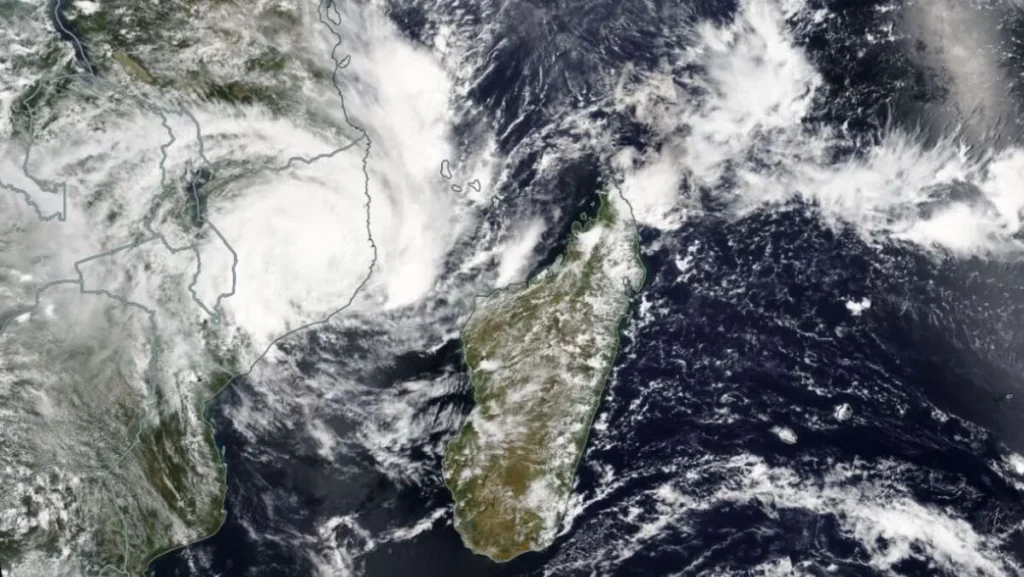
The Regional Emergency Preparedness and Inclusive Access to Recovery (REPAIR) program, a World Bank program which aims to strengthen the financial and operational resilience of participating countries to climate and other shocks, has disbursed an envelope of over USD16.8 million to complement Mozambique’s efforts to save lives and livelihoods in the aftermath of tropical cyclone Jude which devastated large areas of the country on March 10.
Norway provides NOK 50 Million to strengthen Africa’s climate resilience through ARC Ltd.’s SACPIP-Africa initiative
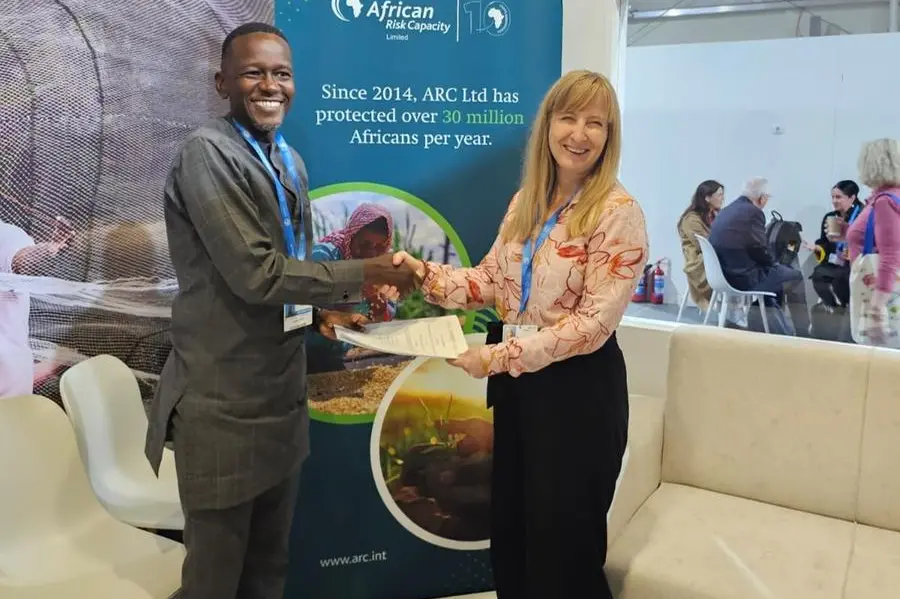
Africa’s economic and social fabric is disproportionately affected by climate change. Over 95% of Africa’s food production depends on rainfed agriculture, with over 70% of the continent’s population relying on it for their livelihoods, making them highly vulnerable to erratic weather patterns. Disasters like droughts and floods exacerbate food insecurity, damage infrastructure, and erode decades of developmental progress. Current humanitarian aid systems are reactive, slow, and insufficient, and many African nations lack the financial and technical resources to respond effectively to such disasters, leaving countries to face delays that deepen human suffering and economic loss.
COP 29 scored a series of victories, but meaningful action remains elephant in the room

As always with COP meetings, deadlines come and go before final agreements are made, and COP29 in Baku proved no different. Ultimately, the conference agreed to the Baku Finance Goal (BFG), a new commitment to channel US$1.3-trillion of climate finance to the developing world each year. The Goal contains a core target for developed countries to take the lead on mobilising at least US$300-billion per year for developing countries by 2035. This represents a $50-billion increase on the previous draft text. It pays special consideration to support the least-developed countries and small island developing states, with provisions on accessibility and transparency. COP29 also ended the decade-long wait for the conclusion of Article 6 negotiations on high integrity carbon markets under the UN. Financial flows from compliant carbon markets could reach $1-trillion per year by 2050. They also have the potential to reduce the cost of implementing national climate plans by $250-billion per year.
Global Shield at COP29: Supporting Climate-Vulnerable Countries
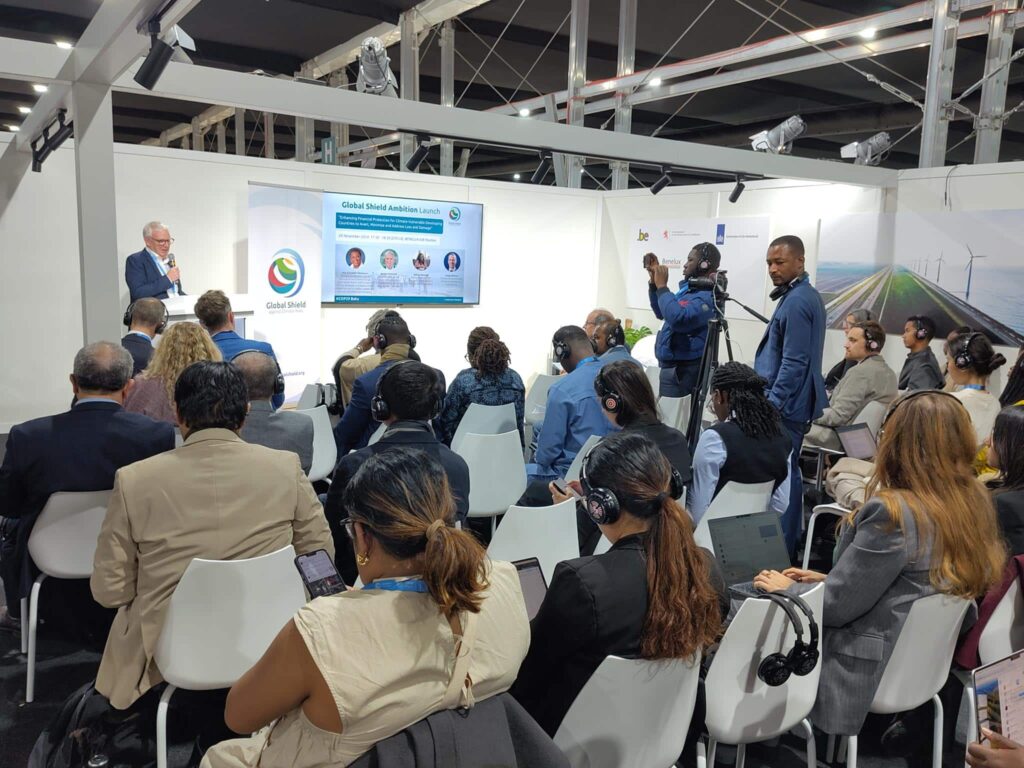
At COP29, the Global Shield against Climate Risks, a G7-V20 initiative, reaffirmed its commitment to protecting climate-vulnerable countries through pre-arranged finance. Co-Directors Nilesh Prakash and Dr. Astrid Zwick led the delegation, unveiling the Global Shield Ambition—a blueprint for enhancing climate resilience and tackling loss and damage via pre-arranged financing solutions. During the high-level dialogue on Coordination and Complementarity for Funding Arrangements Responding to Loss and Damage (FRLD), Co-Director Nilesh Prakash highlighted the critical role of pre-arranged finance in reducing loss and damage.
PCRIC and Regional Risk Pools Host Joint Side Event at COP 29

The Pacific Catastrophe Risk Insurance Company (PCRIC), along with regional risk pools; the African Risk Capacity Ltd. (ARC), the Caribbean Catastrophe Risk Insurance Facility Segregated Portfolio Company (CCRIF SPC), and the Southeast Asia Disaster Risk Insurance Facility (SEADRIF Insurance Company), once again co-hosted a joint side event at this year’s COP gathering in Baku, Azerbaijan. The event, themed “Addressing Loss and Damage from Climate Change: The Role of Risk Pools,” provided a platform for the organisations to share experiences, discuss challenges, and explore collaborative solutions to enhance resilience against climate change impacts. PCRIC CEO Mr. Aholotu Palu highlighted three critical issues facing the Pacific region.
ARC Ltd. advocates for innovative disaster risk insurance solutions at COP29 to bolster Africa’s climate resilience
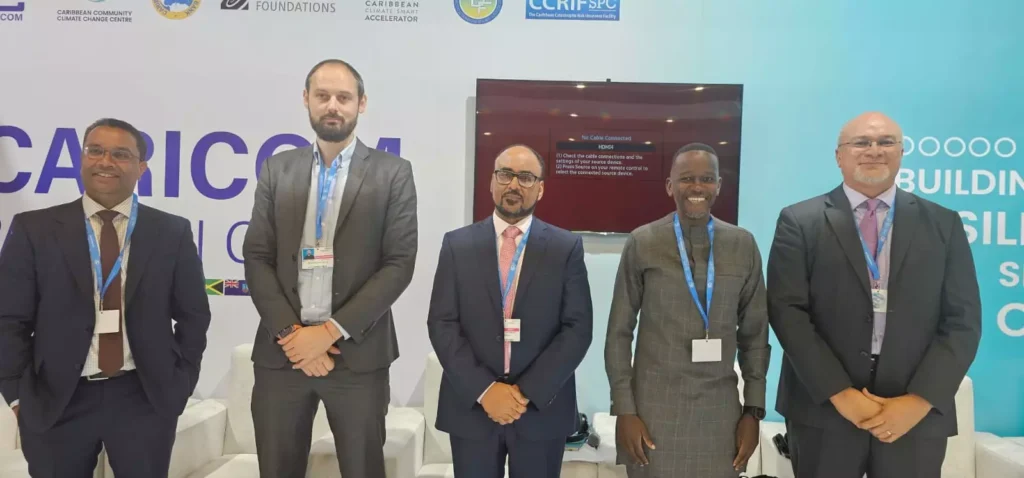
Hybrid mutual insurer African Risk Capacity Limited (ARC Ltd.) is taking a leading role at COP29, advocating for innovative disaster risk insurance solutions to build climate resilience in Africa. This year Finance COP, taking place in Baku, Azerbaijan, from 11-22 November, is focused on improving and increasing the delivery of climate finance to developing countries, with negotiations centred around adopting a new climate finance target.
6.2 Million Vulnerable People in Comoros, Madagascar, and Mozambique to Benefit from Financial Readiness Against Climate Shocks
WASHINGTON, July 30, 2024 — Over six million people in Comoros, Madagascar, and Mozambique are set to benefit from a new World Bank regional program that will enhance Eastern and Southern African countries’ financial preparedness to respond to climate shocks. The Regional Emergency Preparedness and Inclusive Recovery Program (REPAIR), approved today, will strengthen countries’ resilience against climate shocks and seek to attract $205 million in private capital to support these efforts in its first phase.